Free-lance curator/director based in Madrid, Spain, working either in public and private spaces since 1987
Mireya Masó:
Antarctica. Time of change / Antarctica. Time of change
- Curator: Alicia Chillida
- Contributor: Enric Puig Punyet
- Coordination: Josep Perelló, Arantza Morlius
- Installation: Olga Subirós, architect
- Venue: Centre d'Arts Santa Mònica, Laboratory Space, Barcelona, Department of Culture, Generalitat de Catalunya, 2010
- Itinerancy: Centro Cultural de España en Montevideo, AECID
- See publication
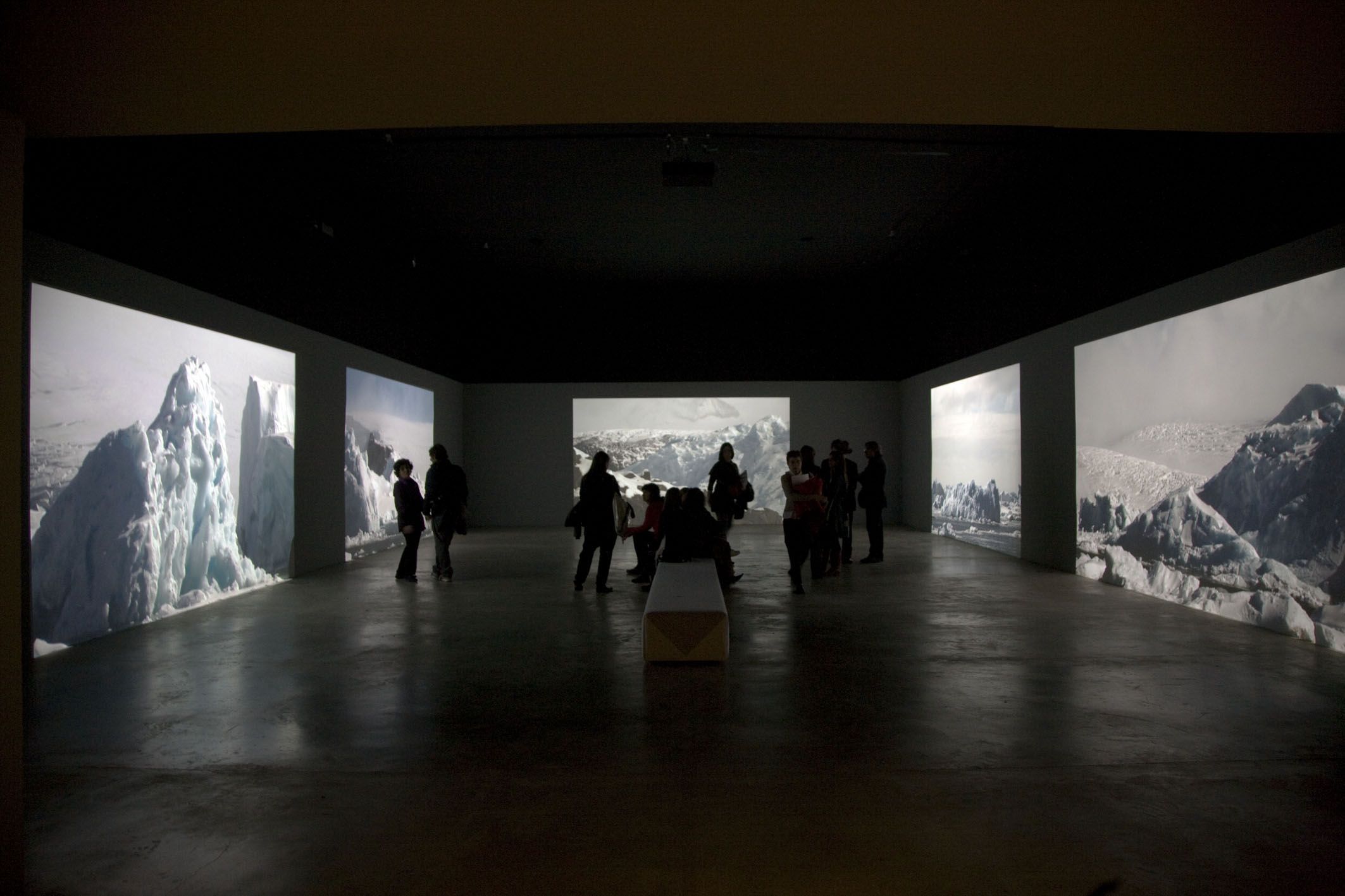
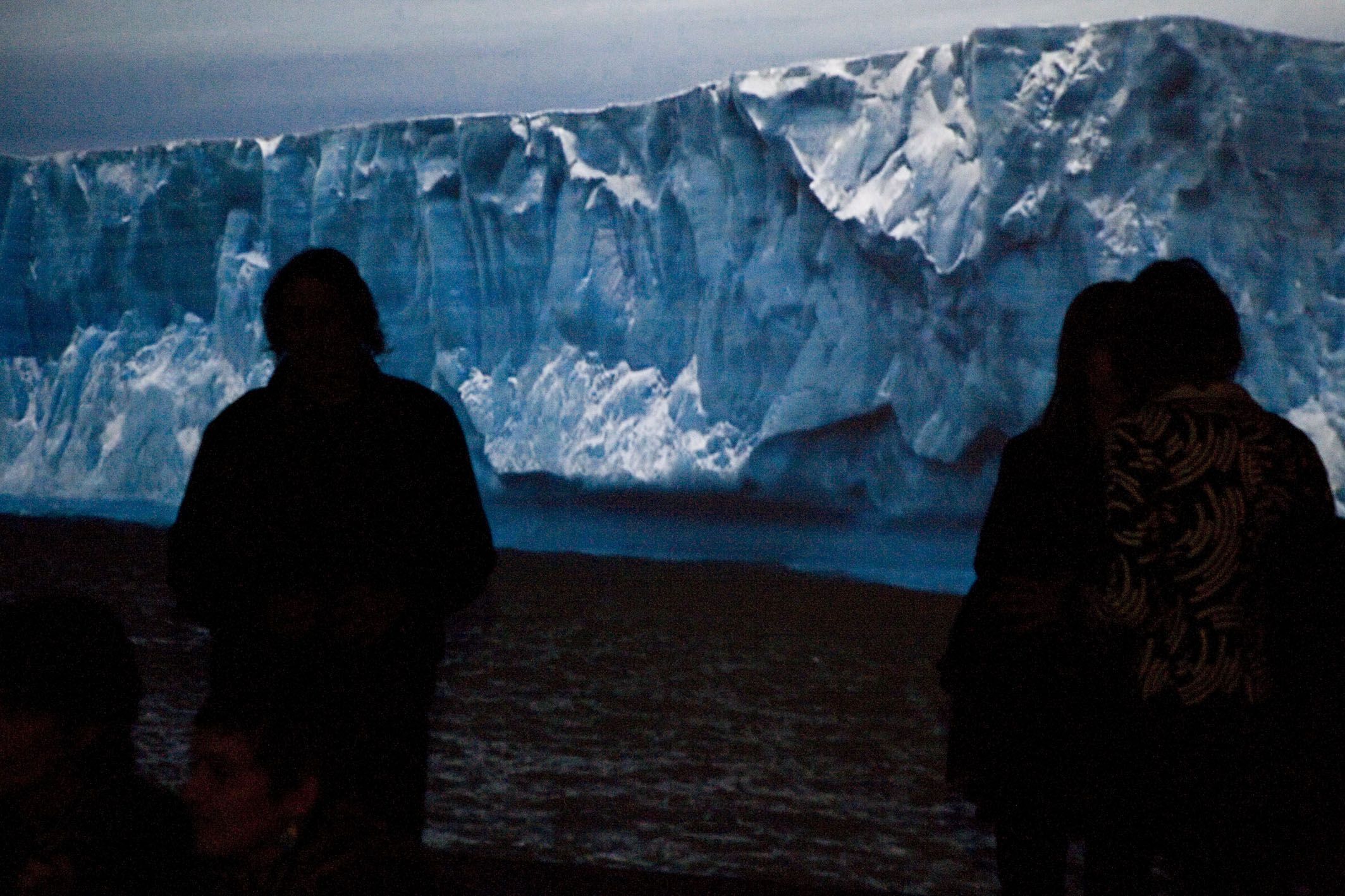
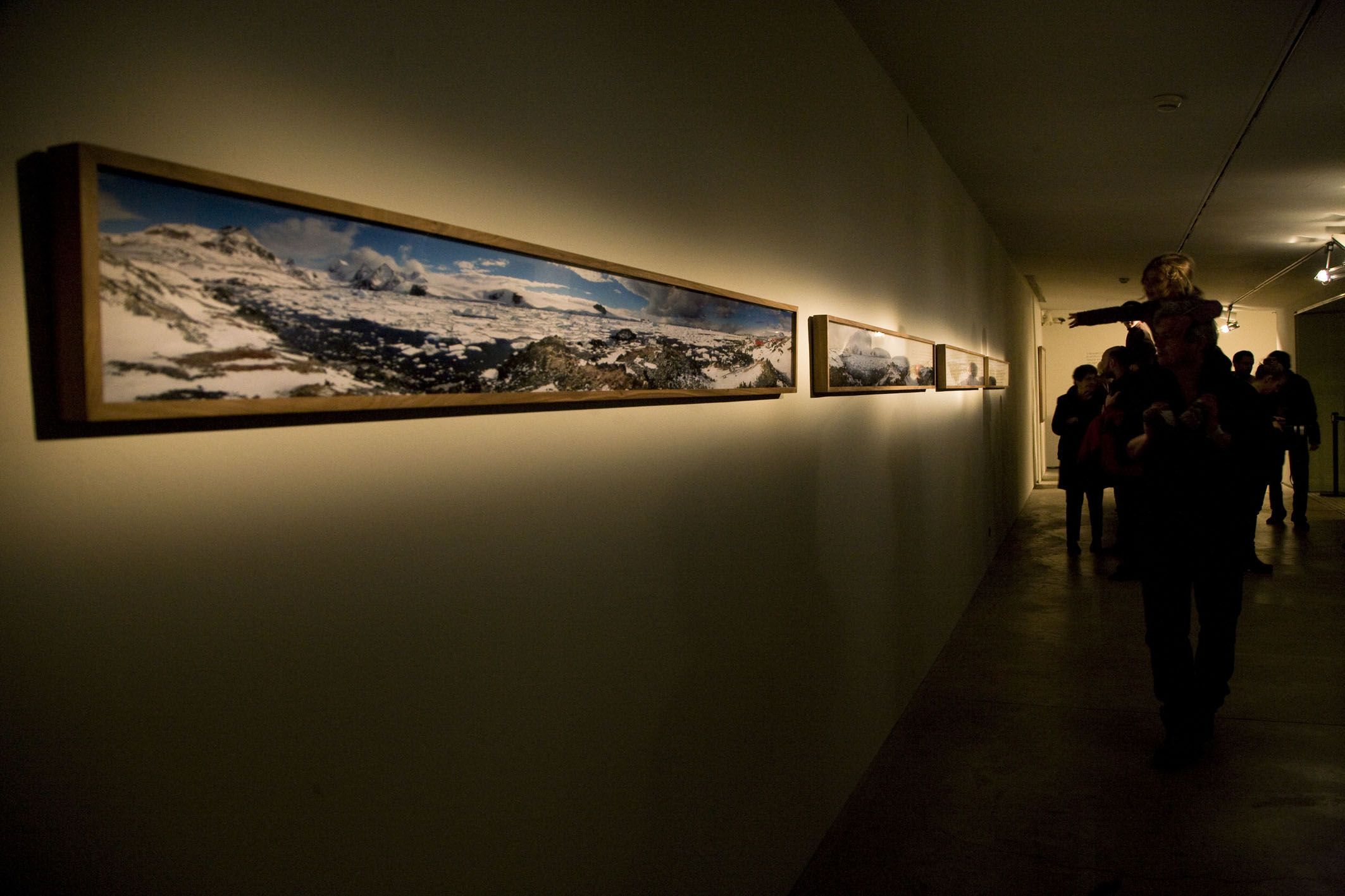
"Antarctica is the visible presence of change. The timed time is materialized in a non-stop flow of sun and fog, of calm, of snowfalls and scree cleared by the wind, of tides, of advances and retreats of icebergs and debris over the bay. It is a landscape in motion, nothing remains beyond the instant. Here in Antarctica every second has the value of the present. It appears and disappears before we can remember it".
(Mireya Masó)
Antarctica. Time for change dialogues with scientific research from an artistic perspective. The starting point is Mireya Masó's fieldwork carried out during the austral summer of 2006 at the Argentinean bases managed by the National Antarctic Directorate in collaboration with marine ecologist Mercedes Masó.
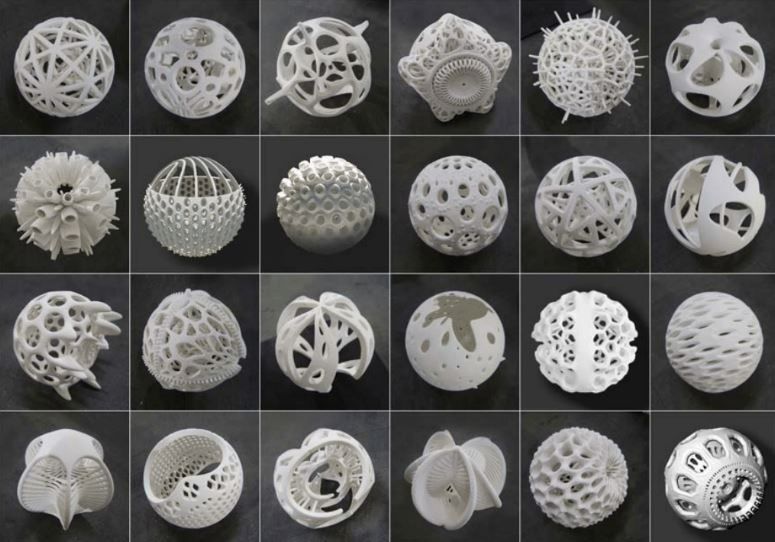
The final result shows a set of videos and photographs that confront us with a natural landscape barely intervened by man. The interest is directed towards the mechanisms of perception of the human being before an environment in continuous transformation. Two axes are set from the perception. The macroscopic through the icebergs that move through the Espe-ranza Bay. And the microscopic one from an experimentation with diatoms at the Institute of Marine Sciences of the CSIC and in relation to a set of projects of students of the Institute of Advanced Architecture of Catalonia.
The exhibition project completes and concludes a three-year cycle of research by the artist, focused on the southern continent. Now it is presented for the first time in the Laboratory Space of Arts Santa Monica an unpublished material produced for this occasion.
Expansion of the visual field. Mireya Masó
Geometry teaches us that the distance to the horizon, the farthest point from the sea that we can contemplate before the curvature of the earth makes it disappear from our sight, depends on the height of the observer added to the value of the radius of the earth. According to this calculation, for an adult man situated above sea level, the horizon is approximately 5 kilometers away and for a child of one meter, about 3.5 kilometers. However, on clear days from the beach of Choza Cove in Esperanza, we could see very clearly to the northwest the coast of the Joinville Archipelago, distanced by the Antarctic Strait some 25 kilometers from the peninsular base where we were, for which in normal conditions we would have had to climb a mountain.
The increased visibility is due to the fact that the sun's rays are more tangential as we approach the poles, where there are approximately six months of constant light and six months of darkness and the sun never rises higher than 23.50 degrees above the horizon. Atmospheric refraction alone seems to justify the exceptional visibility conditions enjoyed in Antarctica. The refractive index depends on the relative humidity and temperature of the air layers, so that in frigid places it is possible to see.
The sharpness of the objects in the absence of pollution, the low humidity of the environment and the luminosity provided by the light reflected on the snow undoubtedly contribute to the expansion of the visual field. (…)
(Excerpt from the catalog, ed. Generalitat de Catalunya Departament de Cultura, Barcelona, 2010).