Free-lance curator/director based in Madrid, Spain, working either in public and private spaces since 1987
International Biennial of Public Art: Edge '92
- Curated by: Rob La Frenais, Jon Bewley, Tracey Warr
- Project management in Madrid: Alicia Chillida
- Coordination: Victoria Malkin
- Artists: Marina Abramović, Maria Thereza Alves, Petunia Alves, Guillaume Bijl, Eugenio Cano, David Černý, Nek Chand Saini, Helen Chadwick, Hannah Collins, Dorothy Cross, Jimmie Durham, Pepe Espaliú, Salvatore Falci, Fastwürms, Martha Fleming, Coco Fusco, Guillermo Gómez-Peña, Maria Klonaris, Lyne Lapointe, Alan Michelson, Antoni Muntadas, Cesare Pietroiusti, Stelarc, Katerina Thomadaki
- Place: Austrias District, Madrid, 1992 / Spitalfields Market, London, 1992
- Photography: Peter Barker
- See publication
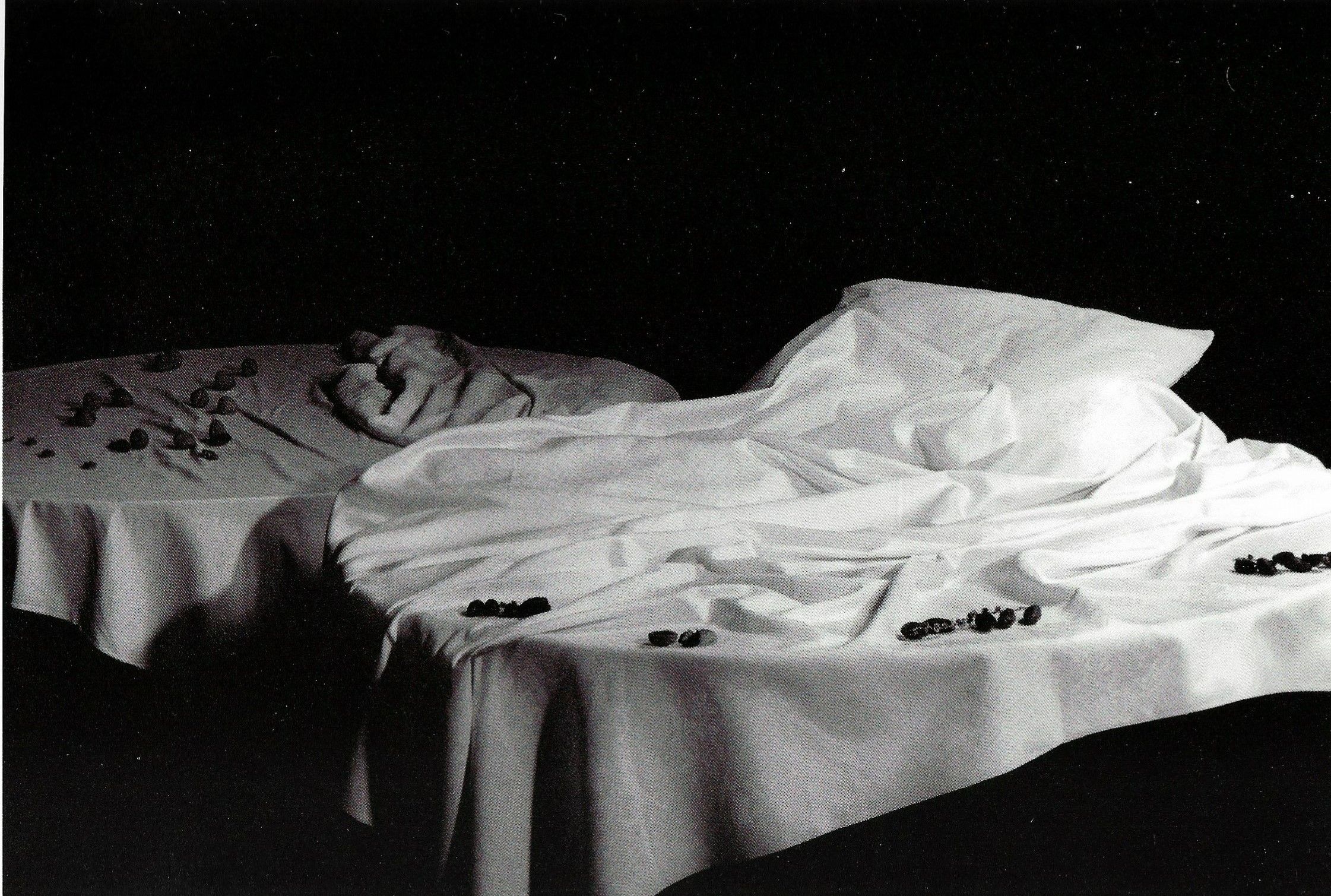
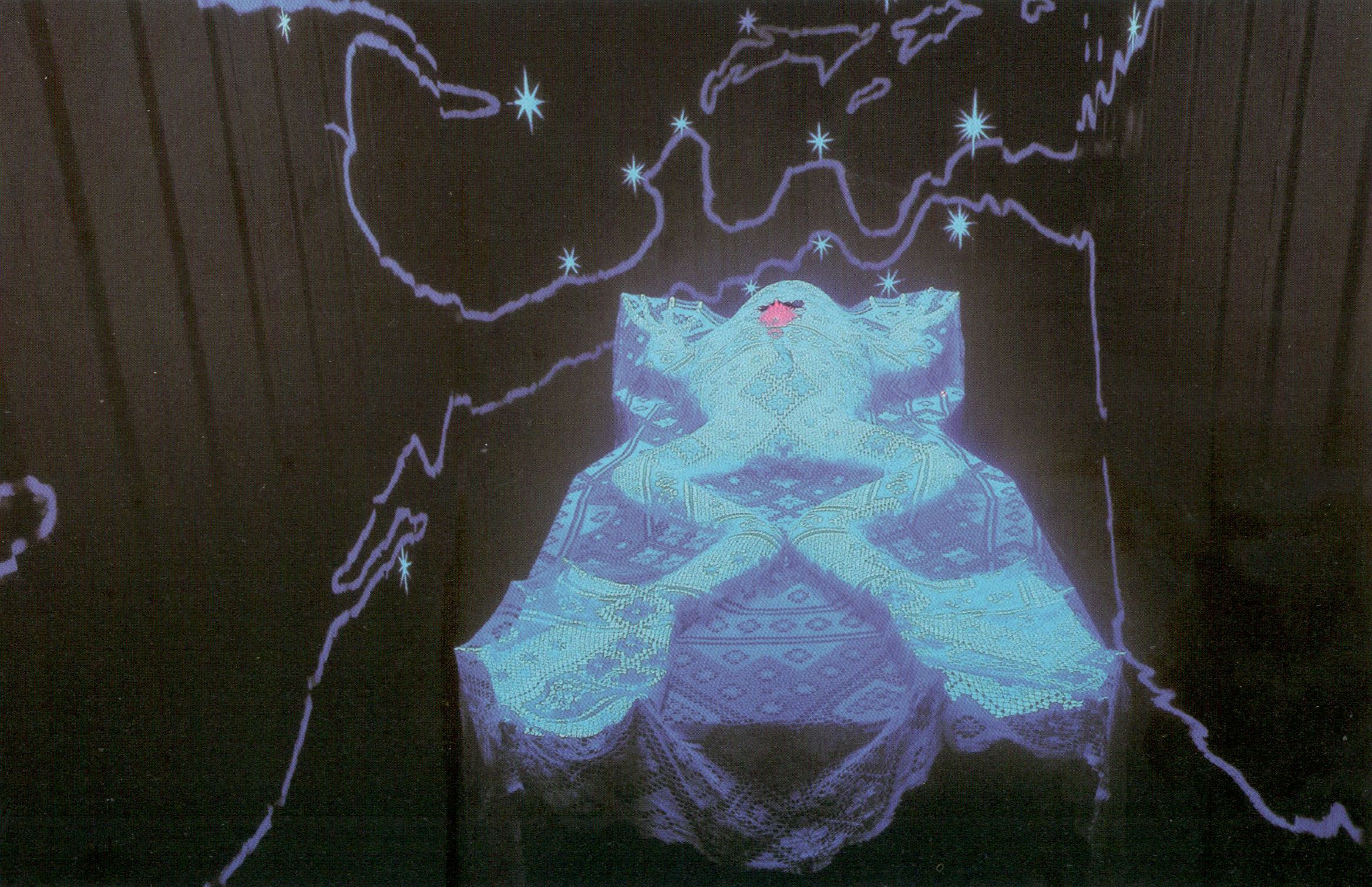
Biography. Performance. Marina Abramović
Place: Gaviria Palace, Madrid
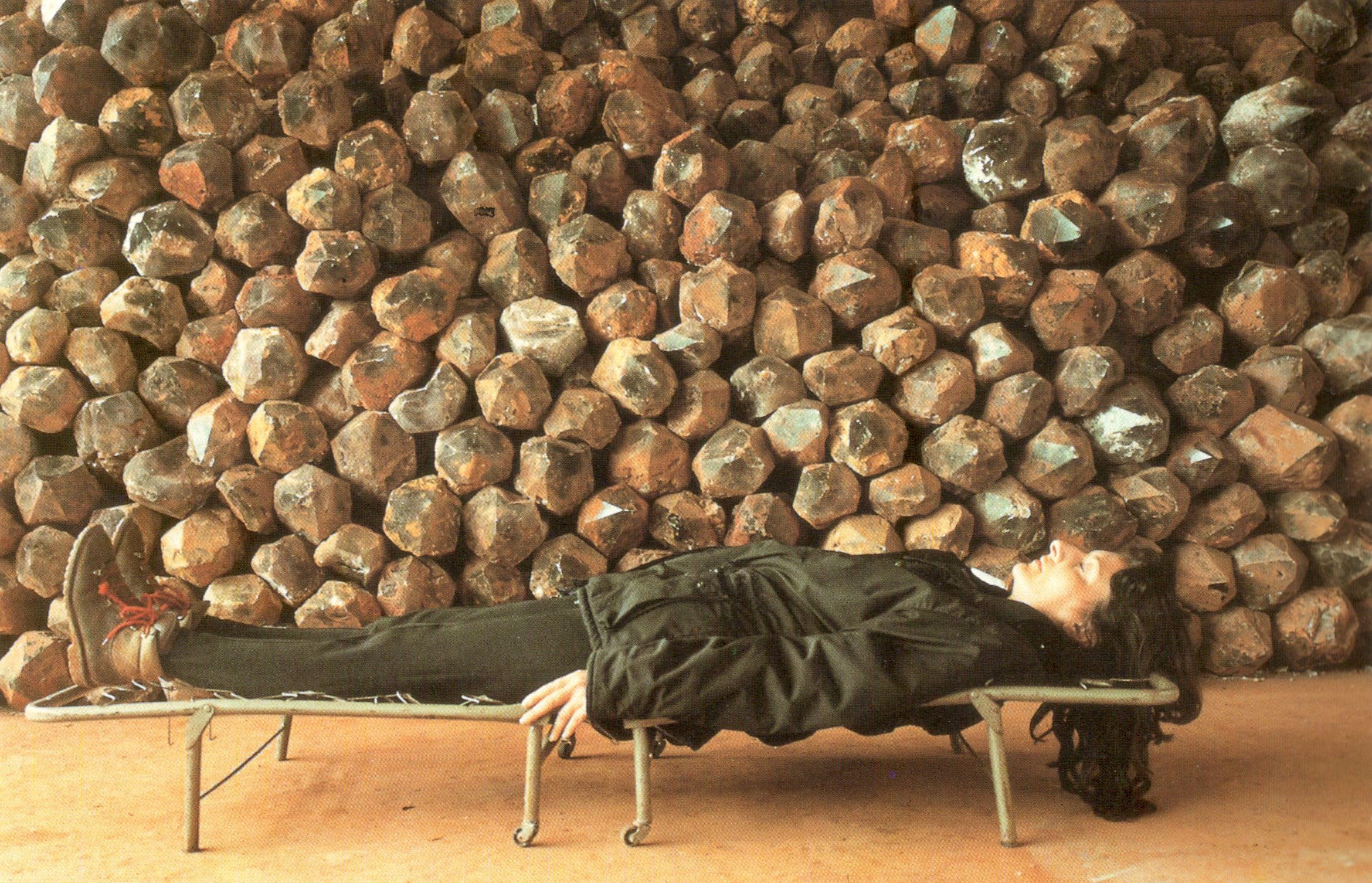
Abramović participates in the Biennial with the performance Biography1992, 1992, which means its first presentation in Spain. The piece es a compilation of some of his most outstanding actions, in which the challenge to the body in a ritual of danger is a constant. The Russian game of saving the fingers between the knife strokes in Rhythm 10, 1973-74; the violent brush strokes on her hair in Art Must Be Beautiful, 1975, or the bloody star drawn on his belly with a razor blade in Thomas Lips, 1975.
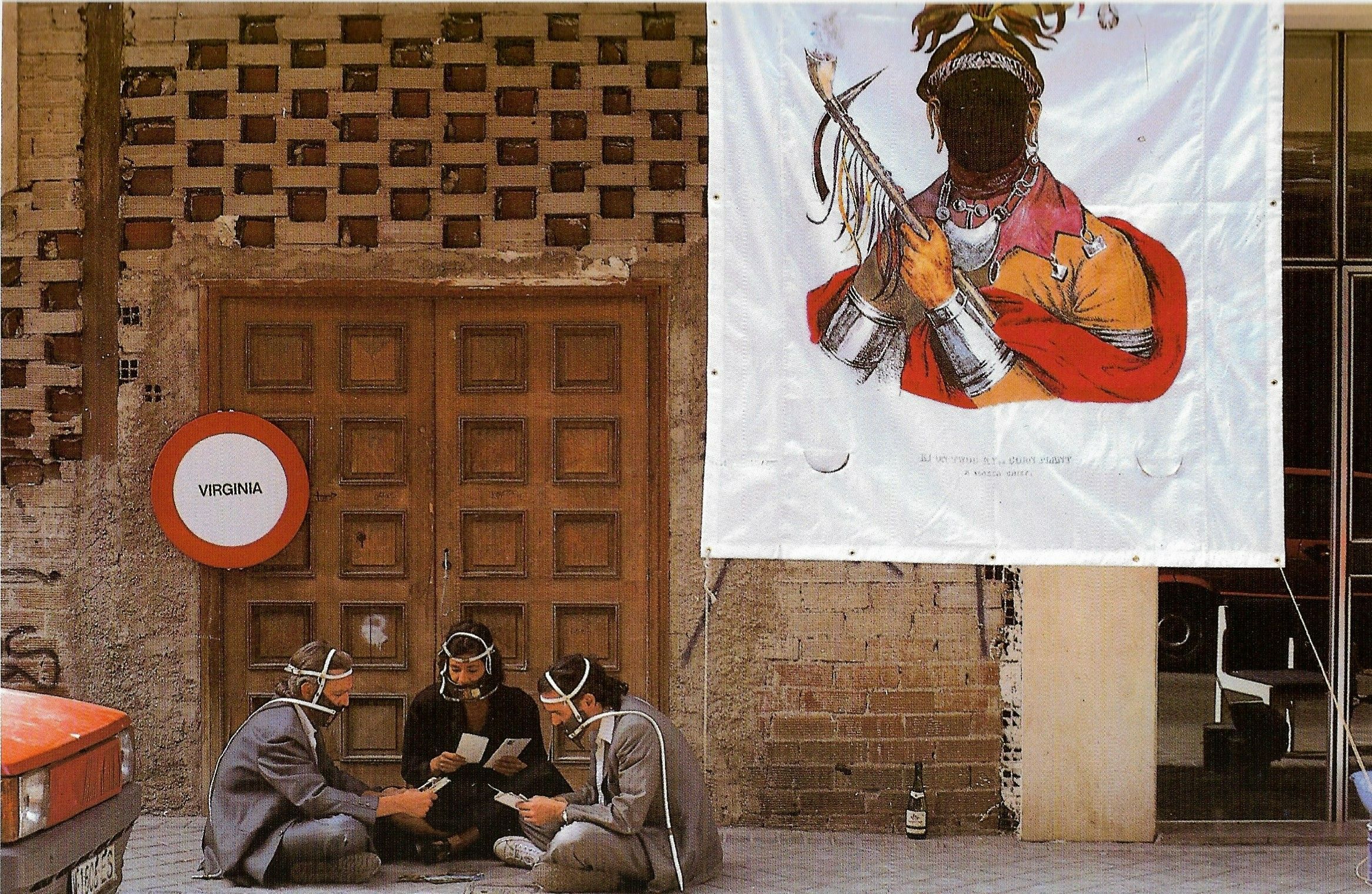
USA/US/VERACRUZ/VIRGINIA.
Maria Thereza Alves, Jimmie Durham & Alan Michelson
Place: Carrera de San Jerónimo, Madrid
Maria Thereza Alves, Jimmie Durham and Alan Michelson "work together at Edge'92 in an attempt to confront their own expectations and, at the same time, our own. Although genetically international, all three consider themselves part of a human lineage that dates back to prehistoric times. Two of them claim to be American Indians, while the third only does so with certain reservations. With their photographs, sculptural installations and their performance hope to reinforce the confusion and perhaps thereby achieve an indirect clarity that may be useful to the general public." M.T.A., J.D., A.M.
Slaughter day. David Černý
Place: Church (in ruins) of the Pious Schools, Madrid
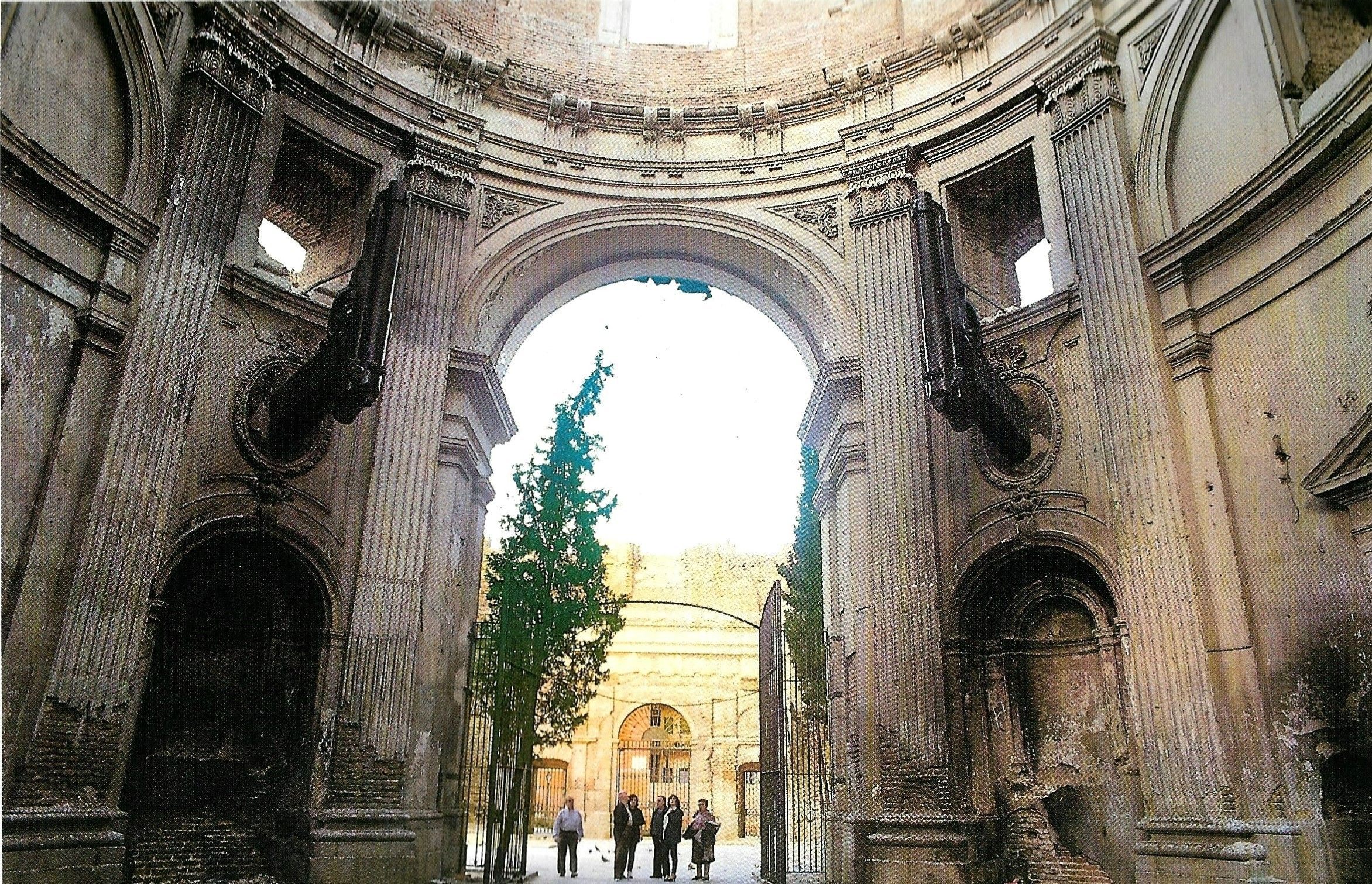
"The Slaughter Day will be proclaimed once a year, or whenever the population density level is highly dangerous. Anyone capable of handling a gun may participate. For the duration of the Day of Slaughter it will be permitted and recommended to kill anyone anywhere. The Government guarantees that it will not prosecute participants. Only the use of firearms will be allowed. Other alternative methods of extermination are prohibited. A strict time limit will be established, from midnight to midnight the following day." D.C.
Fruit snatch: I & II. Helen Chadwick
Place: Project for two fountains - Plaza de los Carros & Plaza de la Paja, Madrid
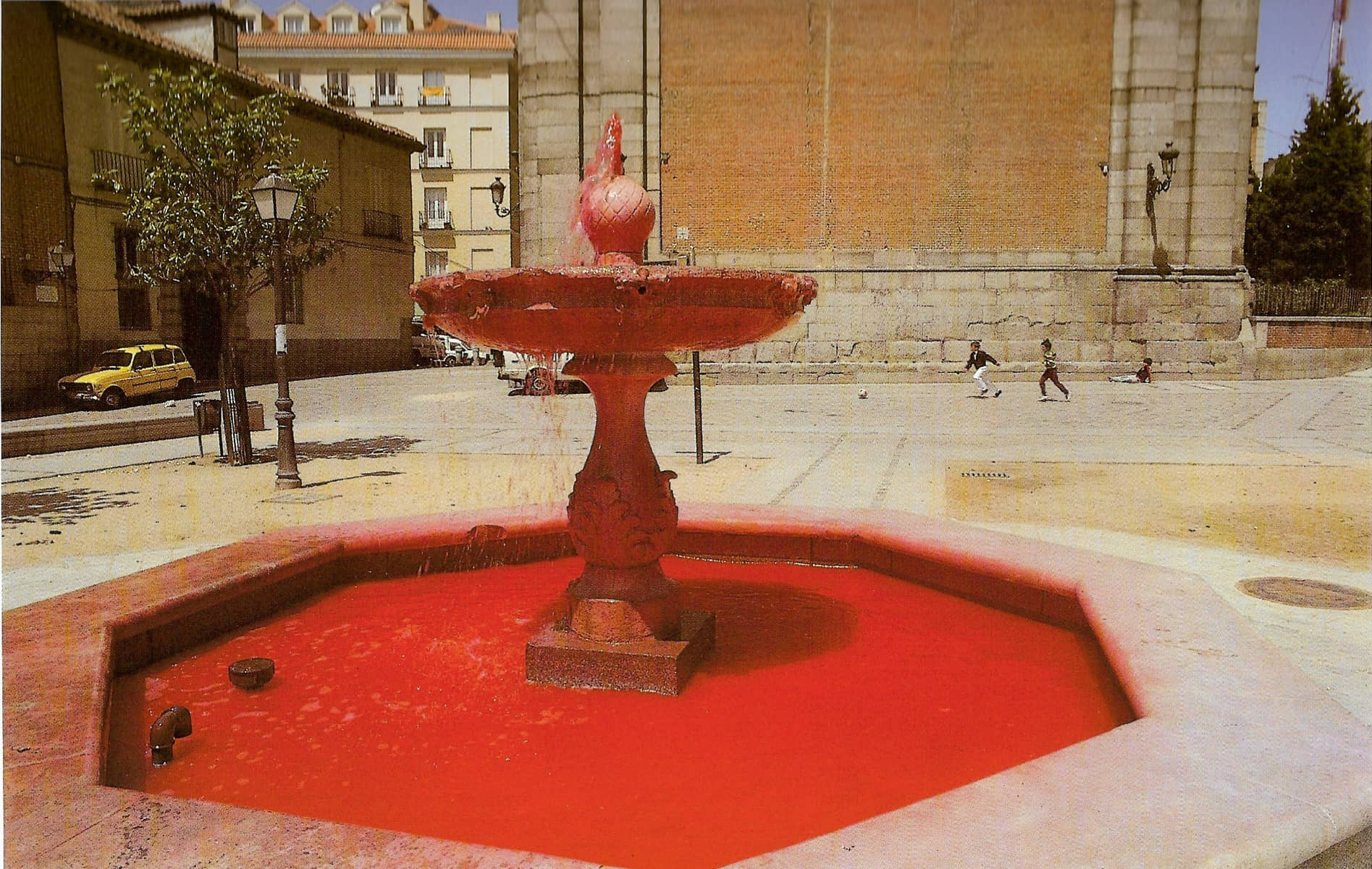
Summary I: "The free extracellular virus, called a virion, consists of genetic material densely enclosed in a spheroidal or helical-shaped shell. Spheroidal viruses could be more accurately described as icosahedral, figures that in solid bodies present twenty triangular faces and twenty vertices. These structures are apparently regular and perfect, but total perfection would imply a crystallized geometry, and the information of the viral membrane would be sealed forever. The ability of virions to initiate an infection is achieved through the apparent perfection of their structure: their icosahedral symmetry is maintained, but the volume increases through the multiplication of faces and vertices. These "imperfections" represent points of maximum stress and, under the right circumstances, coincide with the place where the viron "ruptures" on contact with the cell's receptor and lets the viral material out." H.C.
Untitled. Nek Chand Saini
Place: Emir Mohamed I Park, Madrid
Nek Chand Saini is the creator of the famous Chandigarh Rock Garden India, a huge labyrinth of paths carved into the rock with arches, waterfalls, streams, an amphitheater and many other sculptural elements, built by the artist over thirty years, with natural materials, such as stone, and with everyday discarded objects: kitchen utensils, hairpins, broken plates and bathroom furniture. In Madrid, his outdoor installations combine existing sculptures with others in situ.
Stonefree. People in other countries. Hannah Collins
Place: Emir Mohamed I (interior), Madrid
"Sometimes we weaken our environment, sometimes our environment weakens us. I imagine a place where it is possible to dream about the reality of all countries and continents. There are landscapes in my imagination, I feel friendly towards the world, but we are spiritually alienated. There are people looking for paradise and there are very few who have it and lose it... I imagine a paradise in any country and a perfect landscape, but I always see a huge mass of death and waste. It is like that of water, which travels from one continent to another...". H.C.
Untitled. Pepe Espaliú
Place: Hospital de la Venerable Orden Tercera, Madrid
"Inside the atrium of an old hospital requires the viewer to keep his gaze suspended on three cages that, given their elevated position and their enclosed condition, evoke in a tangential and metaphorical way the characteristics of the place. Since this place is a chapel into which the praying person cannot enter, he keeps his prayer outside of it (prayer of passage)." P.E.
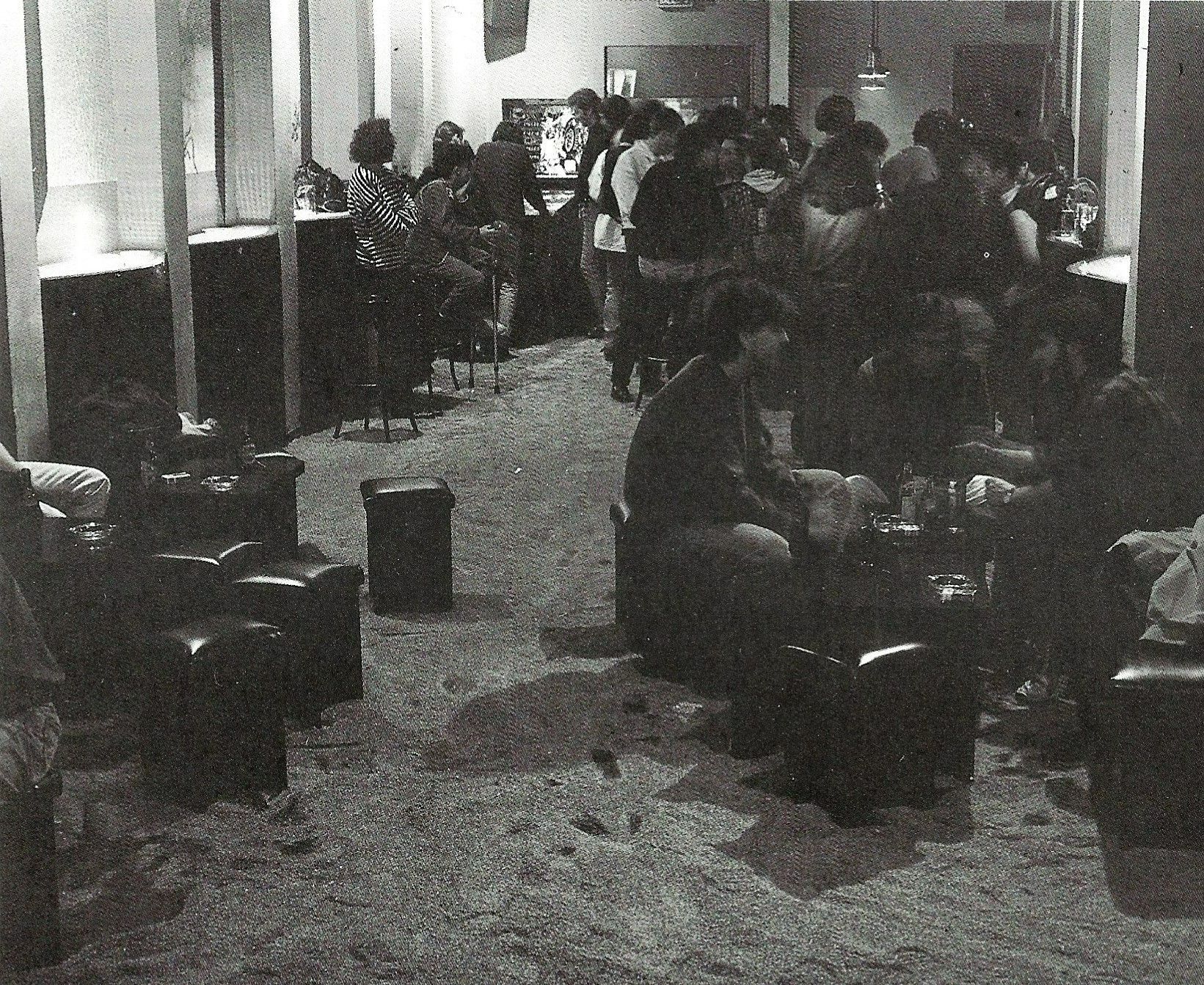
Untitled. Salvatore Falci
Place: Puerta de Toledo Cultural Center, Madrid
"On the floor of a bar in Madrid, a plastic sheet is placed on which grass seeds and sawdust are spread. During the hours when the bar is open, the customers, unconsciously spreading the mixture, sow the seeds at random. At the end of the day, the plastic sheet is removed and watered for eighteen days. In the areas where the seeds have been sown, the grass grows and takes shape relative to the amount of customer movement in the bar". S.F.
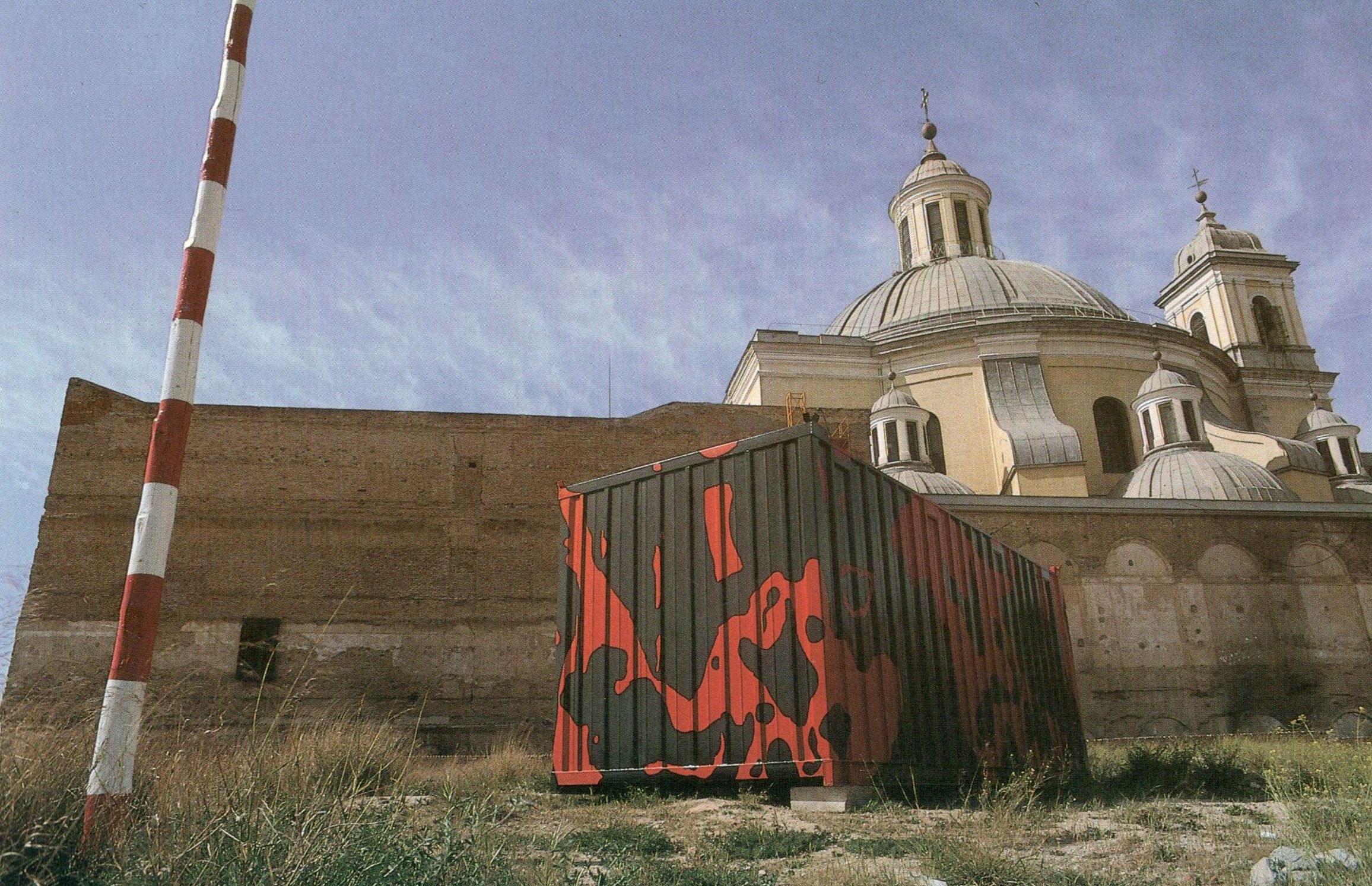
The year of discovery (Dendrobates Histronicus). Fastwürms
Place: Plot of land next to San Francisco el Grande, Madrid
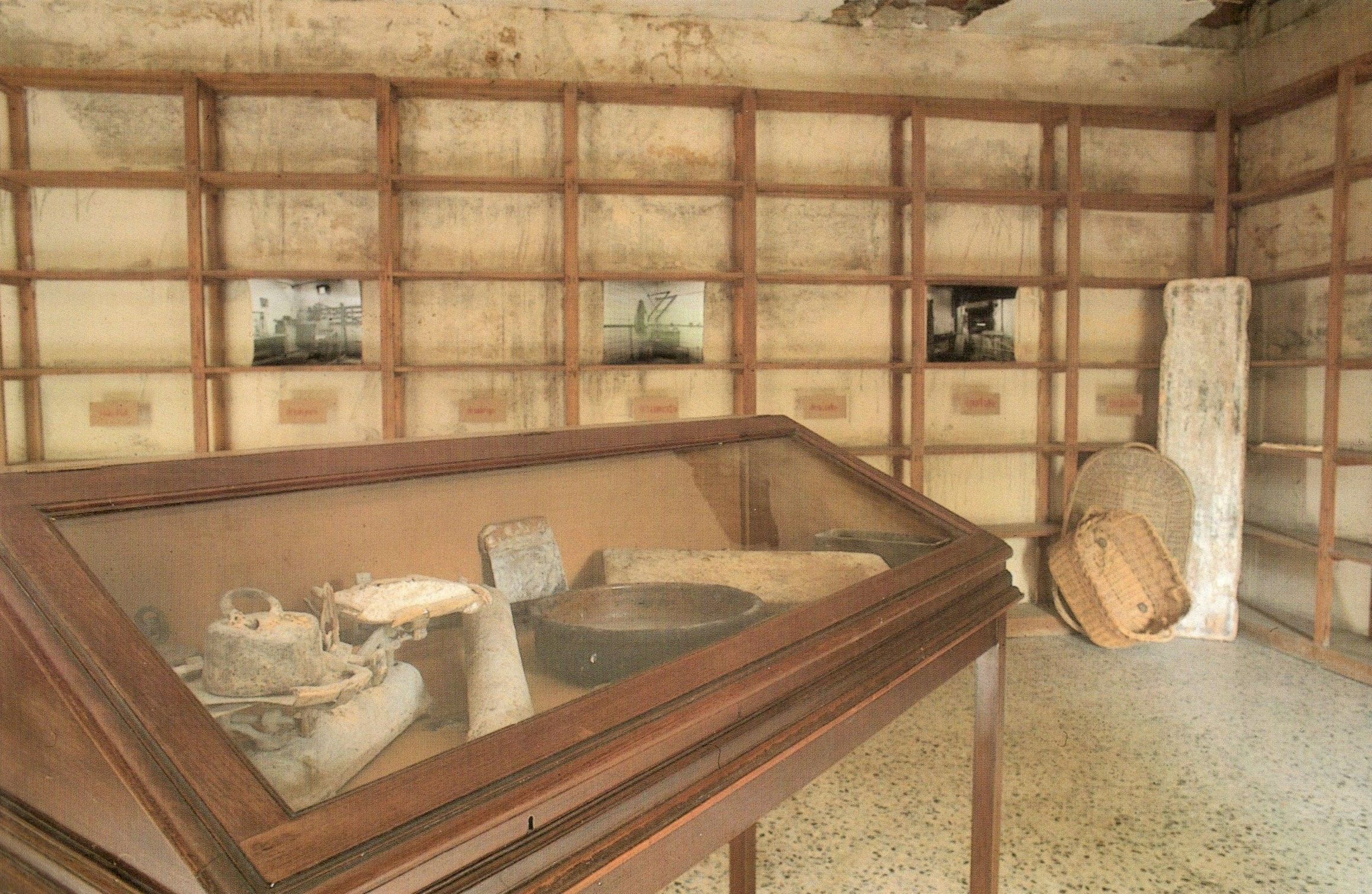
The Container Body: Psychodynamics of Discovery: "The Age of Discovery (Dendrobates Histrionius)".Fastwürms again personalizes the abstraction of history with the figuration and political evocation of memory/body. A specific heritage common to all Western scientific education is thus recalled. The memory of childhood biology classes and the dissected body of the frog: killing to study life. And a little further, the history classes of childhood and the celebrations of the Fifth Centenary. The Age of Discovery constitutes a critical framework that anticipates profanation. The container is hope, an ironic time machine that reveals a shrouded sacred frog. The stench of desiccation, dismemberment and dissection/conquest is replaced here by a perfumed, clean and hand-polished frog: "artifice instead of sacrifice".
Doubt / These are the pearls. Martha Fleming & Lyne Lapointe
Place: Emir Mohamed I (interior), Madrid
Doubt: "Like each one of us, these little loaves of matter are, at the same time, the continent and the content. The density of their spirit is equal to that of the substance of which each of them is made. The desire to transform or modify physically or psychically what we each are by ingesting or applying organic matter in the form of food, medicines or hallucinogenic drugs presents us with a vision of the organic/psychic connection between what is inside the body and what is outside it. Here the body is all 'skin', a transparent membrane that transfers and transforms physical and psychic worlds into the halo of sensations that denies the solid state. Doubt is at the root of all philosophy and its origin lies in the body itself."
These are the pearls: "Trust is the root of all love, and its origin is in contemplation, without demand. The Medusa is the mythological justification for the fear of intimacy. And it was not because Orpheus loved Eurydice too much that he turned his gaze towards her, but rather because his fearful love could not include her unwavering faith in him. Here the pearls are absent from their shells, the mirror dark. The anti-mirror, made of mica. Finally, a false confidence frustrates him, impelled between the optical and thermodynamic qualities of this volcanic rock and the blind orbits drawn, unknowingly, into the milky shells by the dilation of their own valves. Complete trust comes in knowing when the encounter of loving contemplation occurs and when there is no looking back." M.F., L.L.
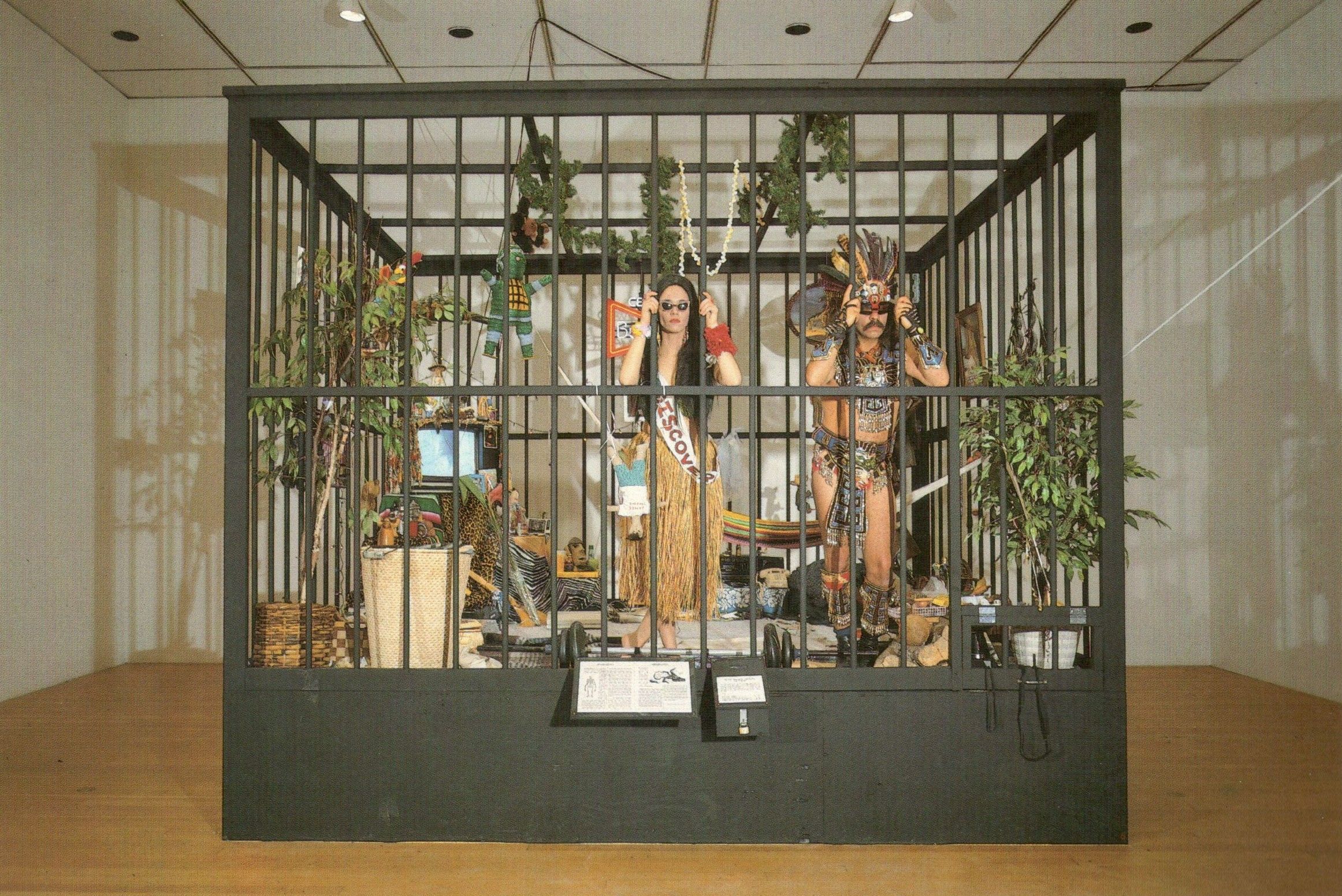
The Year of the White Bear: Take 2. Guillermo Gómez-Peña & Coco Fusco
Place: Plaza de Colón, Madrid
‘‘The art of performance did not originate in the Dada 'events'. From the early years of the conquest, 'aboriginal specimens' of inhabitants of Africa, Asia and the Americas were brought to Europe to serve as aesthetic spectacle, scientific analysis and entertainment. Although the Quincentenary celebrations focus primarily on the European voyages to the Americas, the truth is that these human exhibits were what allowed most Europeans to 'discover' 'the others'." G.GP., C.F.
The artists are enclosed for five days in a large metal cage located in the Jardines del Descubrimiento, Plaza de Colón, Madrid.
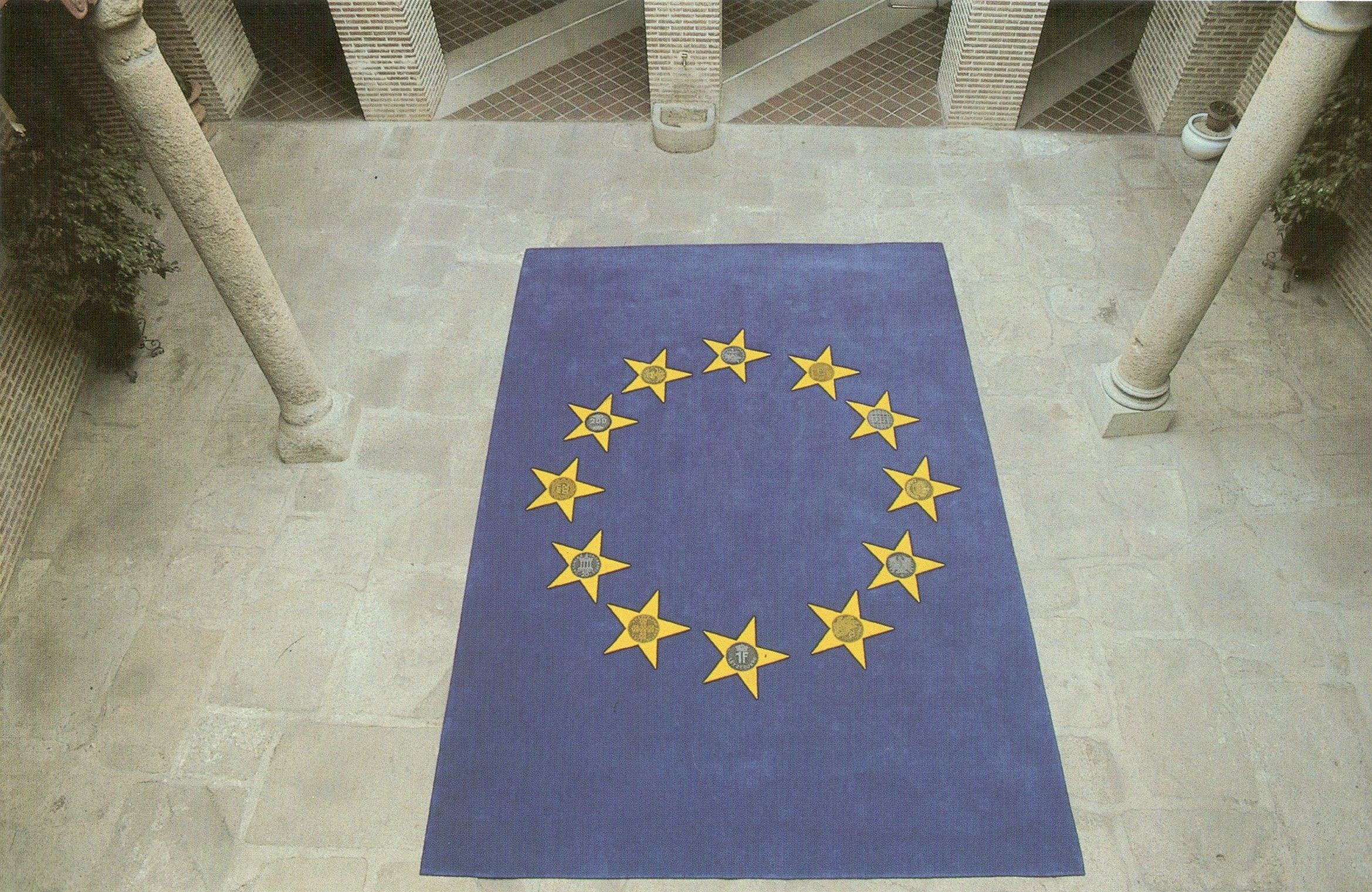
CEE Project. Muntadas
Place: Spanish Federation of Municipalities and Provinces, Madrid, Spain.
The CEE Project (1989-1992) establishes the relationship between symbols and economy, consisting of twelve carpets, each of which will be installed in a public place in the twelve capitals belonging to the European Economic Community throughout 1992. The first exhibition took place at the Witte de With CCA in Rotterdam and the second at the Fundaçao de Serralves in Porto. Once the project has been completed, an edition will be produced that brings together all twelve events. Carpet produced by Kanaal VZW, Kortrijk, Belgium.
Untitled. Cesare Pietroiusti
Place: Puerta de Toledo Market, Madrid
The following question was asked to one hundred people of both sexes and ages between 16 and 65 years old, all of them living in Madrid: "Among all the clothes you own, what garment do you consider the most attractive and 'sexy'? Once the answer was received, each respondent was asked to allow the garment mentioned to be displayed in Edge'92.
(Excerpts from the catalog, ed. Madrid European Capital of Culture, Madrid, 1992)."